Aurora says its driverless truck ramp is about six weeks behind plan, but still targets 200 trucks by end of February
In its third-quarter report, the autonomous trucking company cut its 2026 revenue outlook to about $9 million, blaming early production bottlenecks, and said driverless runs straight to customer sites start in November.
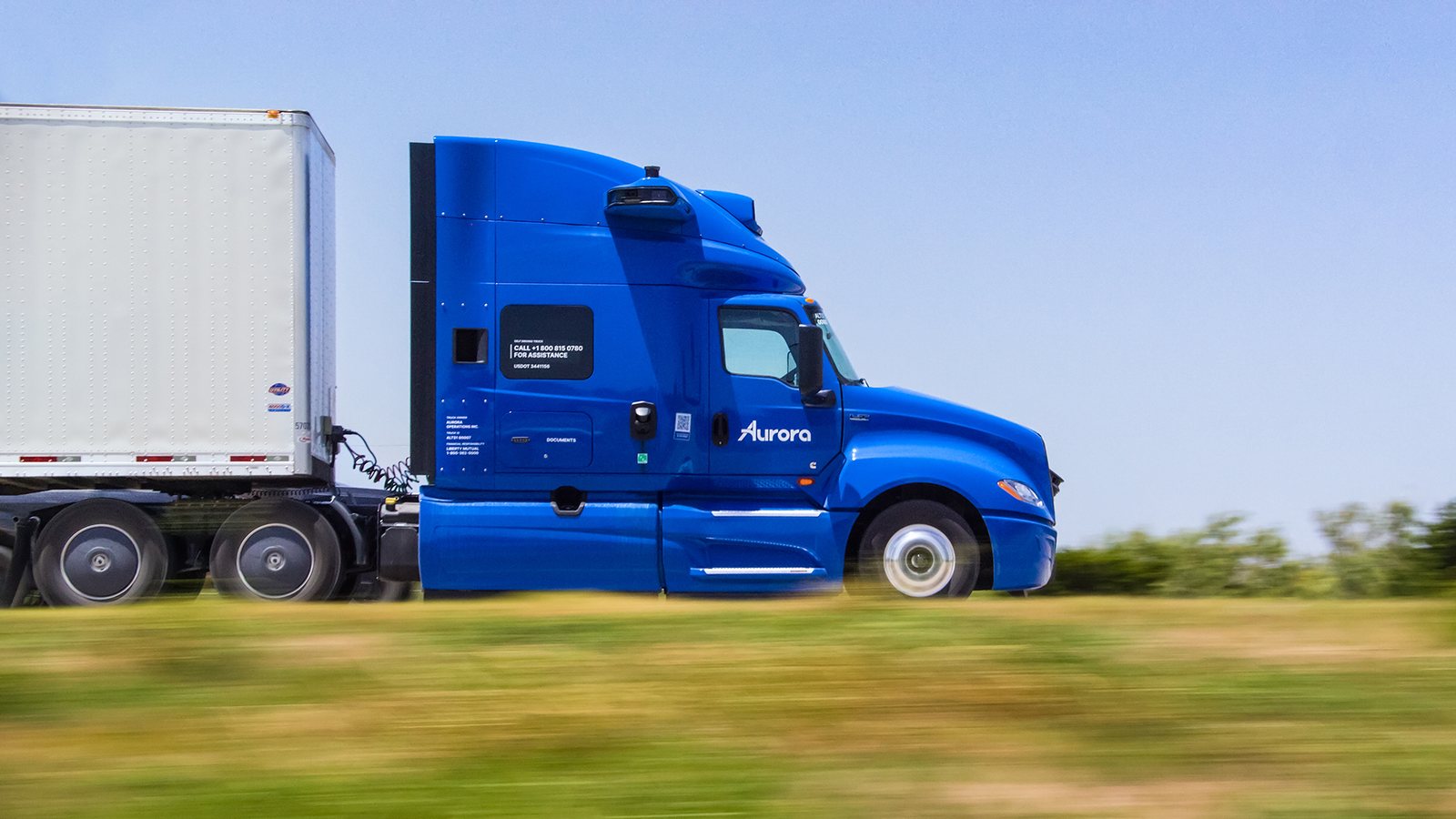
Aurora Innovation says early production problems have put its driverless truck build-out about six weeks behind its earlier plan. The company still says it will have more than 200 driverless trucks by the end of February.
The Pittsburgh-based company reported third-quarter 2026 results on October 28. In its shareholder letter, Aurora said it now expects 2026 revenue of about $9 million.
Production bottlenecks
Aurora's trucks are being upfitted at Roush, its manufacturing partner. Aurora said output in the first month of the ramp was held back by limited material supply, component quality problems and issues found during end-of-line testing. The company said those problems are being fixed and weekly output is rising.
Aurora now expects to reach its target rate of about 20 trucks per week in early December. It said it has more than 20 driverless trucks built and entering the fleet. Together with Roush, it wants to be able to build more than 1,000 trucks a year.
Aurora repeated its longer-range targets: more than 1,000 driverless trucks in operation by the end of 2027 and more than 30,000 by the end of 2030. These are company projections, not results.
Operations
Aurora said its trucks passed 500,000 commercial driverless miles in September, with 100% on-time delivery since its driverless launch.
Starting in November, Aurora said, the Aurora Driver will run directly to customer sites for several driverless customers, including navigating security checkpoints on its own. The company said site-to-site driverless operations would expand to most of its customers over the following months.
The letter also described a weigh station capability. Aurora said autonomous trucks have mostly relied on voluntary enhanced pre-trip inspections to bypass weigh stations. Its system can now tell whether a station is open, pick an available scale lane and handle different scale layouts.
Truck makers and hardware
Aurora said Volvo's plans call for deploying more than 300 driverless trucks in 2027, ahead of full industrial production in 2028. Work with PACCAR, which builds Peterbilt and Kenworth trucks, is also continuing.
Supplier AUMOVIO has started design validation of Aurora's third-generation hardware kit at a dedicated facility in New Braunfels, Texas. Production there is planned for the second half of 2027.
The numbers
Aurora reported third-quarter revenue of $3 million and an operating loss of $257 million, including $54 million in stock-based compensation. Excluding that compensation, research and development spending was $160 million.
The company used about $170 million in operating cash during the quarter and spent $36 million on capital expenditures. It expects to use about $250 million in cash in the fourth quarter, and it ended September with more than $1 billion in cash and short-term investments.
Aurora's figures for 2027 and beyond are forward-looking statements. The company says those plans depend on production, customer demand and other risks described in its filings.