Washington's must-carry chain season is on: what trucks over 10,000 pounds need on I-90 and other passes
From November 1 to April 1, heavy vehicles on Snoqualmie Pass and a dozen other mountain routes must carry enough chains to meet the state's chaining rules, plus two spares.
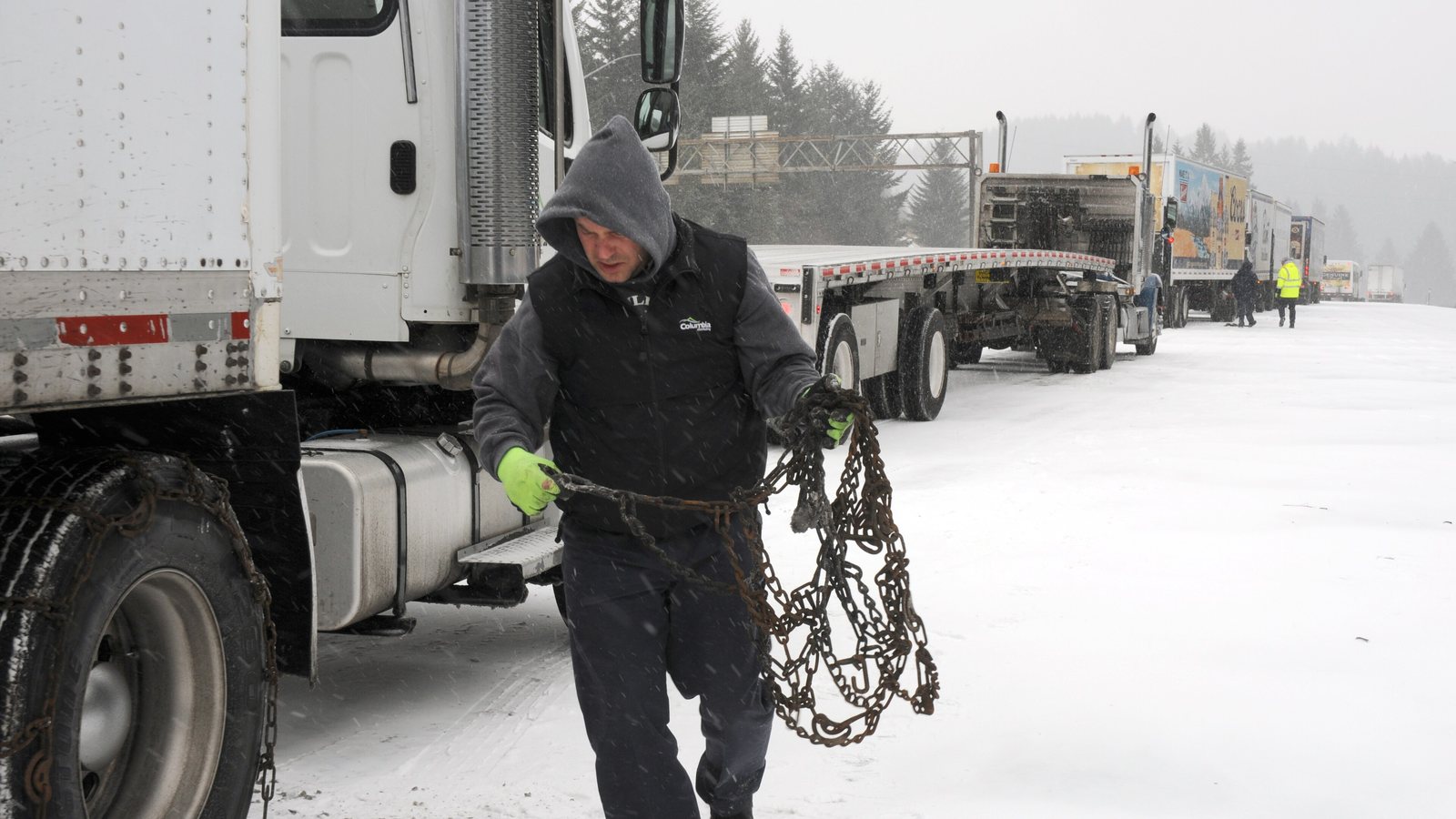
Washington's winter chain rule for heavy vehicles took effect November 1. Truckers running Interstate 90 over Snoqualmie Pass, or any of the state's other designated mountain routes, need enough tire chains on board to satisfy the state's chaining rules until April 1, 2027.
The requirement comes from WAC 204-24-050. It applies to every vehicle and vehicle combination over 10,000 pounds gross vehicle weight rating on the listed routes, whether or not chains are required that day. The Washington State Department of Transportation posts the same rules on its commercial vehicle page.
Enforcement on Snoqualmie Pass
The Washington State Patrol said in a November 2 release that troopers would hold a two-day chain enforcement emphasis on Snoqualmie Pass on November 3 and 4, 2026. The agency said the goal is to educate commercial drivers and get them to carry chains from November 1 to April 1. WSP said it would post the results on social media.
Routes covered
The must-carry rule applies on these segments:
- I-90 between North Bend (milepost 32) and Ellensburg (milepost 101)
- I-82 between Ellensburg (Exit 3) and Selah (Exit 26)
- SR-97 between milepost 145 and the SR-2 junction, and between the Columbia River and Toppenish
- SR-2 between Dryden and Index (Stevens Pass)
- SR-12 between Packwood and Naches (White Pass)
- SR-410 from Enumclaw to Naches
- SR-20 between Tonasket and Kettle Falls, and between Newhalem and Winthrop
- SR-155 between Omak and Nespelem
- SR-970, mileposts 0 to 10
- SR-14 between Gibbons Creek and the Cliffs Road intersection
- SR-542, the Mt. Baker Highway, between mileposts 22.91 and 57.26
Vehicles making local deliveries shown on their bills of lading, and not crossing the pass, are exempt from carrying chains as long as they stay out of the chain-controlled area.
What counts as enough chains
Carrying "enough" means enough to meet the chaining rules for your axle setup when "chains required" signs go up. The rule also requires every vehicle over 10,000 pounds to carry at least two extra chains in case conditions get worse or a chain breaks.
Approved chains must have at least two side chains with hardened metal cross chains, so that at least one cross chain is touching the road at all times. Plastic chains are not allowed. Trucks with automatic chains must still carry regular chains for the outside tires of each drive axle equipped with them.
How many tires must be chained depends on the axle configuration. On a common five-axle combination with a tandem-drive tractor and a tandem semi-trailer, drivers can chain all tires on one drive axle or one tire on each side of both drive axles. Either way, chains must go on at least four drive tires, plus one tire on one of the trailer's last two axles. Combinations with six or more axles and auto transporters have their own requirements in the rule.
WSDOT's chain requirements page and the full WAC text spell out each axle configuration. Drivers who run the passes regularly should count their chains against their own setup before the first big storm, not at the chain-up area.